Friday, 17 March 2017

The Slow Museum

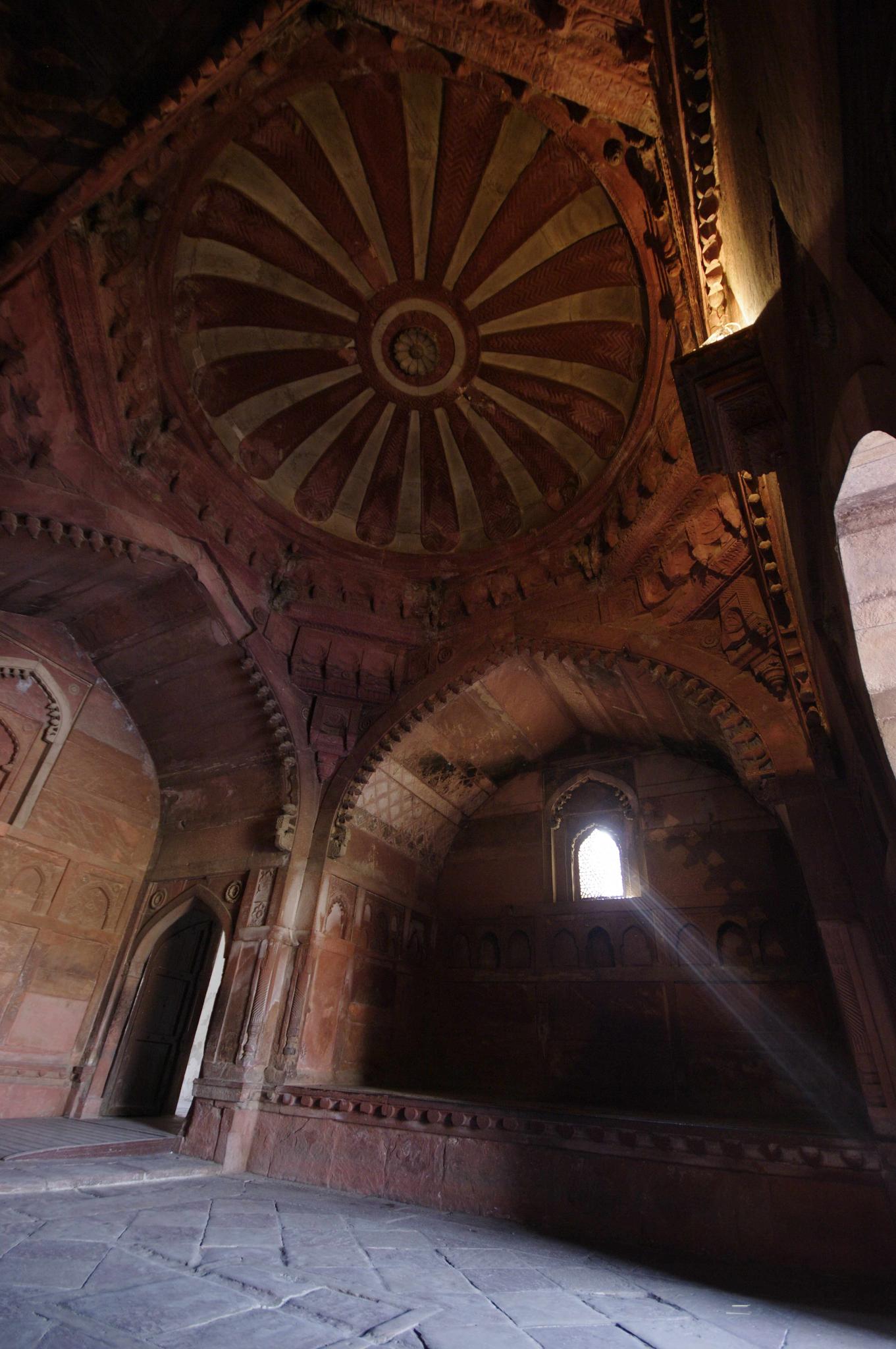
A lovely article in the New York Times advocates 'slow' museum visits rather than the pressured "must-see" approach.

I particularly like the idea of a thirty second look at a work of art as equivalent to looking at a book jacket and claiming that you've read it. Actually *looking* at art or architecture rather than simply *seeing* it takes time, and it requires you to be actively engaged.

So regard a museum visit not as a snakes and ladders like race from the entrance to the exit, picking up a handful of renowned masterpieces en route, but as a more sophisticated game. In art galleries for instance you can play quite a few games besides those suggested in the article.
  • Spot the truly bad pictures. This is a silly game, but once you start thinking about just why those pictures are so bad, it's quite enlightening. It's particularly interesting when you can put together a pair of 'great' and 'pants' paintings - it's wha your smartphone's for.
  • Follow the pointing finger. So much art works on the basis of gestures - but what's really going on? What are the people in paintings pointing at and looking at? The answers are sometimes intriguing.
  • Find a massive picture with a lot going on, and start looking for the details. The cat hiding under the table. The man looking through a door in the background. The half-eaten apple on the table. The detailed painting of a lace ruff or a brocaded skirt. The cracks in the plaster on the wall. The way the light hits the edge of a cup.
  • The eyes have it. Find portraits whose eyes really challenge you or inspire interest. Look at how the eyes are painted - the highlights, the hollows, the eyelashes, the colours, how they relate to the rest of the painting. Think about how the treatment of eyes has changed through art history. Take a photo of just the eyes. Would you recognise the painting from it?
 In the museum:
  • Explore the small rooms with not many people in. Get acquainted with the intimate side of life - ancient Egyptian toys in the British Museum, a whole case full of medieval locks and keys in the Musee de Cluny. Sometimes you get closer to a culture this way than looking at the grandiose statues of Pharoahs or huge altarpieces.
  • All the angles - look at the big artefacts from different perspectives. A worm's eye view, a sideways view, close up or from further off. Each different view will give you a different appreciation of what you're looking at.
  • The mechanics - how was a thing made? how did it work? thinking about these questions can deepen your knowledge. For instance, how was a Roman mosaic laid? what colour did the mosaicist start with? how fast could he work? (I found out recently that some mosaics came ready-made, laid out on a substrate, ready to be installed.) Just taking the time to look hard at an early clock and work out how the gearing of the time train operates gives you an understanding of the subject you can't get from books.

Above all, give a great museum its time. It's so easy to think if you're in Paris, you have to visit all the museums and pack four or five into a day. All the newspapers and magazines, all the tour operators, all the guide books will tell you to do this. Bugger that. It's like going to a Chinese buffet and simply piling food down your gullet without tasting it at all.

Either spend your first day sampling museums, then go back to the one you found most interesting - or simply decide you will see two that you have a particular interest in. Like medieval art? Never mind the Louvre - head for the Musee de Cluny and spend all day in the middle ages, then spend a day looking at Notre Dame, the Sainte Chapelle and a couple of the oldest churches in the city. Into modern art? Then head for the Musee d'Orsay and the Beaubourg, and if you have time add the Branly for an insight into the different art of other societies, which influenced many twentieth century artists and helped them challenge tradition.

Remember, too, that revisiting can be even more of a pleasure than your first visit. I've been visiting the British Museum for ... well, I think it must be more than thirty years now, and there are still whole galleries I haven't visited, as well as a good few exhibits that I now regard as old friends.

Wednesday, 9 November 2016

Slow travel and the art of context

I have a friend who has 'done' India. Taj Mahal, check; Jaipur, Amber, check; Red Fort, Delhi, check.

Well, there are several responses to that. Apart from the fact that the 'Golden Triangle' isn't India, and that he hasn't seen a single decent Hindu temple, or any of India's Buddhist heritage, he's missed all the enjoyable small towns - Orchha, Mandu, Bundi...

But I think the biggest problem with that kind of speedy highlights-only travel is that you miss out the context. Even with the Taj Mahal, there's a whole load of context that people miss. For instance, the tiny but elegant tombs of two of Shah Jahan's other wives that occupy matching corners near the entrance (one is now used as a depot for bits of old stonework, carpentry tools and other maintenance essentials, though I managed to wander in while the gate was open); who knew that Mumtaz Mahal wasn't the only one?


But there are other contexts, too. For instance, visiting the tomb of the first and arguably the greatest of the Mughals, Akbar, is instructive; it's a massive, brutal pile, with strange little chhattris stuck on top, creating a weirdly turretted silhouette as well as mixing Hindu and Muslim architecture in the typically eclectic style of this multicultural monarch. Nothing in it prefigures the Taj - except for its lovely gardens, quartered by causeways in the Mughal style, and now home to tiny tame squirrels with tails like licorice allsorts, and elegant antelopes. The fountains of the Taj Mahal are silent, and the only noise you hear in the gardens is that of tour groups - it's in Akbar's gardens, surrounded by young courting couples who come to feed the squirrels, that you understand why the Mughals saw the garden as an image of Paradise.

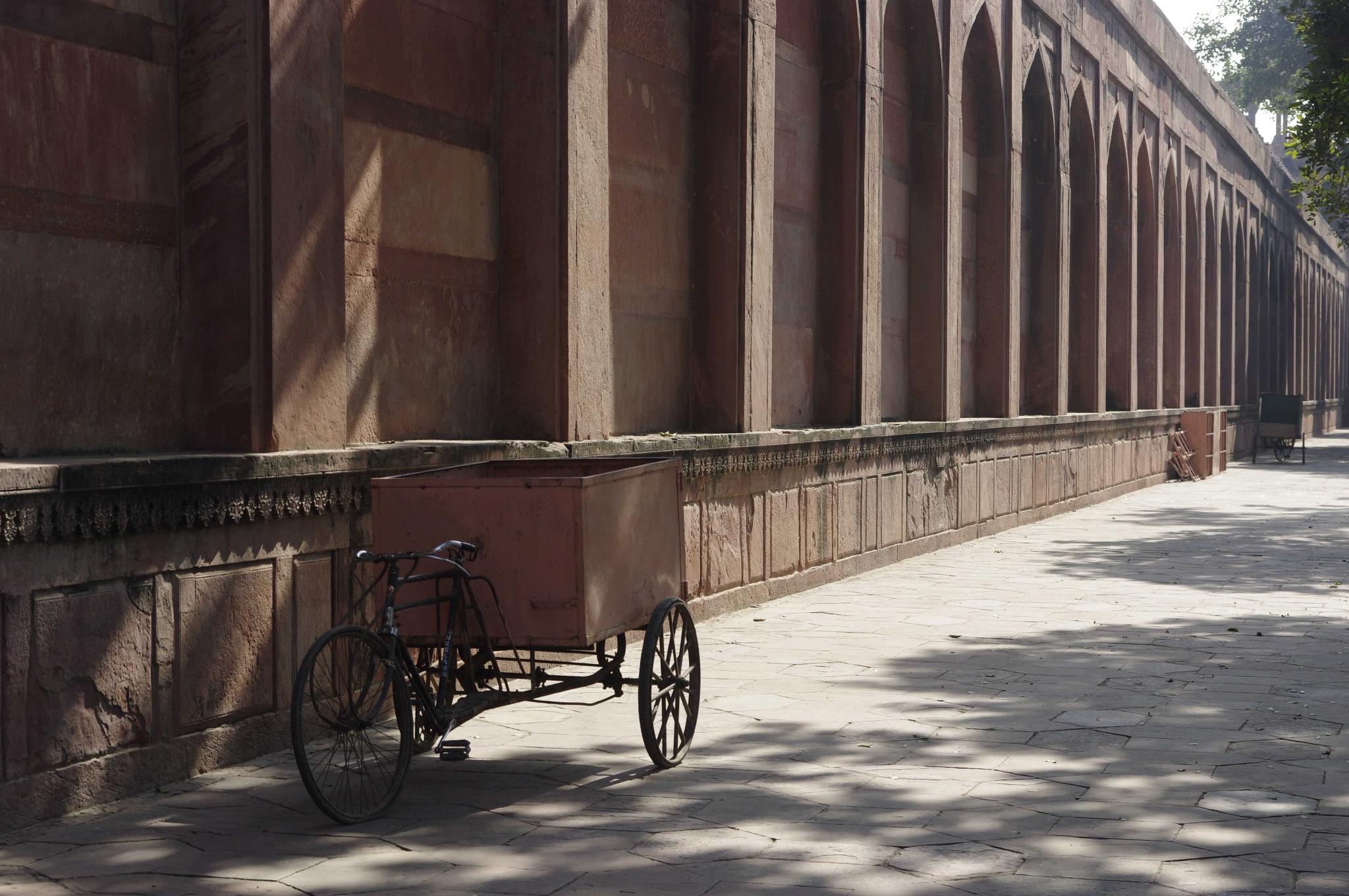
Wander around the back streets of Agra and you find other Mughal tombs, much smaller, and in the typical red sandstone of the area rather than the tremendously expensive white marble of the Taj. But in every case, the geometry is the same; a square or octagon with a done, within a containing wall. Some are locked up behind chicken wire, others open to visit; one is full of feral cats. None of them are worth the air miles on their own - but once you've seen them, you understand the ideas behind the Taj, the earth, so to speak, from which it springs. And its genius then seems even more amazing.


You don't need weeks to take this approach; visiting every Mughal monument of note in Agra would take three or four days. Not everything you see will be a highlight; but you'll understand the highlight much more once you do finally see it. (I was quite glad my first three days in Agra were filled with freezing fog; it made the Taj all the more impressive once the skies cleared.)

But the other thing that's wrong with a 'highlights' tour is that if you're not careful, you miss some of the flavour of the country. I know well the sheer size of India, having taken a two-day train from Mumbai to Kolkata and another stunningly long journey from Chennai up the coast to Bhubaneshwar. It was boring in some ways, enlightening in others - a chance to talk to Indian MBA and engineering students going back to university after the vacation - but above all it instilled in me an appreciation of the immensity of the country, and the way everyone always seems to be on the move. Taking the toy train in Sikkim is more interesting to a railway buff, but it doesn't give you that insight into India.

So, suppose you have only three weeks to 'do' India? Be mindful of the context. Give yourself enough time to know one place properly; get a bicycle and wander around Hampi and Anegundi, or settle down in Leh and hike the surrounding hills and gardens, or just get a hotel room on the ghats in Varanasi and start wandering. You'll learn far more about India that way than just seeing the highlights.

Sunday, 4 September 2016

Three sparse cultures

England is very rich. By which I mean not that GDP is high or that everyone's got millions, but that it has a very rich and diverse flora and fauna almost everywhere. Look around Norwich and you'll see flint, brick, thatch, tile, wood, all used in different ways on different buildings; look at traditional foods and you'll see cheeses, meats, different vegetables and cakes and breads. Lots of diversity. France, where I spend a lot of time, is the same; around us in Eure-et-Loir there are huge fields of wheat and barley, but also miscanthus (for biofuel and compost), beef and dairy cattle, goats, colza (for oil) and strips of apple trees (traditionally for cider). Variety is the spice of life.

Sparse cultures are very different. They grow up in marginal lands, where the terrain or the climate (or both) prevent there being such a rich variety of foodstuffs and building materials. Sparse cultures have a very strong flavour; and I rather love them. They're under threat, sometimes from globalisation and the introduction of a cash economy which doesn't match traditional life, sometimes (as on Formentera) from high property prices which make a traditional lifestyle with its small scale agriculture uneconomic.

Formentera is a marvellous island. It's rocky and sandy, hot, dry, has no snakes (only tiny iridescent green and blue lizards), is less than 20 km long. It was an island contested between Arabs and Catalans for years, and Arabia has left a few influences - notably the mixture of mint and sugar in the traditional flao (cheesecake).

Of course there were always fish - hung up to dry on driftwood poles. The smaller boats were run up little wooden slipways into ramshackle boathouses. Inland, farming was only made possible by engineering the land so that rain runs off from rocky bare areas into cisterns, one for each house - tiny whitewashed cubes that are one of the characteristics of the island. The houses, each with a little porch, sometimes with towers, are also whitewashed; rarely more than a single storey high, and rough-hewn in their looks.

In a sparse culture, things have to do double duty. So the fig tree is not allowed to grow as it likes, as it might in the South of France, and just produce figs. It's trained into a huge umbrella, with its branches supported on planks, so that livestock can shelter from the sun under its fragrant shade.

Unfortunately Formentera is now becoming an overspill for Ibiza. People are building ranch-style, chalet-style, horrible Eurotrash houses and demanding that the traditional house gets made over into a hotel-style apartment with eau de nil accents and a spa-style bathroom. But some of the local residents still manage their small mixed fields of tomatoes, potatoes, onions and (next to the house) flowers, and the prickly pear still grows wild, though somehow, I've never managed to be on the island for the prickly pear season.

Ladakh is all about making oases in the high altitude desert. Fields are scooped out of river valleys; sometimes terraced, but never in the extreme way you'd see in the Philippines or Indonesia - this terracing is just about making the best of gentle slopes. Willow and poplar grow around every village and are the main building materials apart from rock; tamped willow rods form borders around the top of the wall, while the poplar provides beams. There are apricot trees, and dried apricots are one of the staples; otherwise, it's grain, with a short growing season, and whatever you can get to grow in the vegetable patch. And there's yak butter - milk doesn't keep, I suspect - to put in your tea, and there's beer made with fermented grain, and that's about it. It could get very boring. But somehow there's an intrinsic joy to Ladakhi life that stops it becoming monotonous.

Oman is the last of the three sparse cultures I've visited. Rocks and sea and sand; that's about it, unless you go as far as Dhofar with its frankincense trees and dripping khareef monsoon season. Rocks and sea and sand, and mostly rocks.

The traditional Omani building material is dirt. Huge forts were built with mud brick walls, and a new coat slapped on every few years to protect the fragile material against wind and (infrequent) rain: where buildings have been left uninhabited and unaided, they start to slump and sag, and eventually become just piles of dirt.

Roofs and ceilings are made of palm tree branches and palm leaves. Dates make oil as well as being a staple snack. The palm tree, omnipresent in every oasis, is used in every way possible, for building, eating, even for killing your enemies by pouring boiling oil on them from the fortress battlements (although no one does that any more).

The oasis uses the palms to shelter lower growing crops; but a lot of the space is used up growing greens for livestock. A system of waterways, the falaj, carry water from the high mountains down to the oases, and sluices give every field and every farmer fair division of the water. (Many of the falaj are now being replaced by black plastic tubing, but the system remains pretty much the same.) High efficiency, dense agriculture, but limited in its scope and locations.

Then there's coffee, which doesn't grow in Oman but is every Bedouin's invariable beverage. Three cups to welcome a guest. Always kept in a big thermos, to be ready for guests at any time. Coffee with cardamom - because Oman is a sparse culture with a surprise: it was on the trading routes from India to East Africa, and even, at one time, owned Zanzibar, so spices became part of its DNA.

And, for perhaps the same reason, or perhaps because there are so many Indian and other subcontinental guest workers in Oman, the national dish of choice nowadays appears to be chicken biryani.

By contrast, India is another rich culture (obviously, with the exception of Ladakh). Whatever it is, India has a diversity of it - religions, languages, climates, styles, foods. And yet... it's still India, still indefinably, inevitably, unmistakably India. But I'd better leave that to another post...

Monday, 25 July 2016

Snails galore at Cluis

I thought that was weird right away. The central green of this little Berrichon town is decorated with three big stone snails.

But then I thought if La Chatre had bronze sheep, and Rouen had concrete cows, then Cluis having snails wasn't quite so strange.

I went into the little microbrewery on the square and was invited to have a glass of snail slime. That was very weird.

("La Bave du Luma" turns out to be a quite acceptable strong bitter, brewed by an expatriate Brit who knows his stuff.)

And then found out that every year has a Fete du Luma, or Snail Feast, with a huge motorised snail leading the procession. (Luma is local dialect for the edible snail, 'escargot' everywhere else in France.)

Someone's back garden has a little traffic sign, a triangular red bordered sign with a little black snail - 'warning! snails!'

Someone else has curtains with little snails drawn on them.

Everywhere you look - snails!

Apart from the snails, Cluis turned out to be a fascinating little town. The splendid old manor house has been turned into the Mairie, there's an ancient church with some nice glass, a splendid medieval timber covered market, and a huge old fortress in the valley below whose pinkish walls are impressive even in their state of ruin. The town was a stop on the pilgrim route to Santiago de Compostela, so you see a couple of scallop shells contesting the snails' hegemony.

But it's the snails I'll remember!


Thursday, 21 July 2016

FOMO vs really missing out

After YOLO comes FOMO. Nasty little abbreviations, but FOMO is definitely nastier than YOLO. Fear Of Missing Out is insidious. It's a distant cousin to the deadly sin of Envy; it's anti-Zen, anti-spontaneity, anti-life.

I see FOMO travellers all the time. They want to pack the whole of India into three weeks. They end up seeing nothing but tout-infested tourist traps. They see the Taj Mahal at dawn and they're out of there by lunchtime; they never get as far as the Himalayas, and they miss out on the delights of small town India.

FOMO travellers get bored when they're somewhere like Luang Prabang. They say 'There's nothing more here for me to see', or 'It's not Bangkok', or 'too many temples'. They don't talk to the monks, they don't go along to chat to the Laos learning English at Big Brother Mouse, they don't get to know one special Sandwich Lady on the market.

I admit to having some of the characteristics of FOMO travellers. I always want to do too much. I always want to see everything. But I've learned to take my time. (And okay, I have time, since I made travelling a priority and rented my house out to do it.)

Because if you're always afraid of missing out, you will miss out.
  • Your schedule will be too full for you to decide to stay for a week in that place that really speaks to you. It will be too full for you to tiptoe into a music class and decide that playing dulcimer is something that's worth missing the hill tribe visit out of your Thai  itinerary. It will be to full to have lunch with a nice Burmese history teacher in a little cafe near Shwedagon Pagoda, instead of eating in the tourist place with everyone else.
  • You'll miss the thing you didn't know was happening. At Palitana, I so nearly missed the great mela - its date changes from year to year; I decided at the last minute to stay for another two days and walk the great pilgrimage with thousands of Jain devotees. I ended up being water-pistolled cool, given rose-scented towels, and entertained to some of the best Indian cooking I've ever had.
  • You'll miss the delight of becoming a temporary local. At Orchha I was invited to play karrom with Ram Babu and his sons, to become the official photographer for a local wedding, and to join a family picnic for a little boy's birthday. I even got a personal brazier and massage from grandma when I came back wet and cold from an expedition to Gwalior that turned into an out-of-season monsoon.
  • You'll miss being able to sit down and just soak in the spirit of the place. There's a stand of ancient trees somewhere in Ladakh where I sat for two hours, just because it made me happy.
Okay, you may not have six months to travel around India, as I did last time. But leave yourself some space for the special things to happen. Get to know one small area well, or get open tickets so you can change your plans on the fly, and above all, know that the guide books and the '100 things to see before you die' (or 300 things, or 1000 things) are not meant specifically for you - and that what you love may be very different from what's in the guidebook.

In which spirit, things I'm glad I've seen and experienced, but that were never in the books:
  • the cats of the book bazaar in Istanbul, and their special cat drinking fountain,
  • the Japanese chanting monk at Rajgir who invited me to chant Nam-myoho-ren-ge-kyo along with him,
  • the box of kittens in a cafe in Meknes, and the brothers we met who look after 22 cats between them and scrounge offal from the butchers to feed them,
  • Buddha's birthday celebrations at Temisgam, Ladakh, with traditional dancing, spicy lunch, and the chance to scramble around some very steep scree,
  • dancing and singing with a brass band at Shivatri Mela in Pachmarhi,
  • visiting a goat farm on the Sentier Cathare and seeing kittens and kids playing together in the hay,
  • lying on a comfortable big boulder on the Way of St James in the Massif Central, watching the infinitely deep blue of the sky and feeling happily lazy,
  • seeing a flock of goldfinches on teasel, somewhere near Nasbinals,
  • finding the Mestre rowing club outing on Torcello and getting a ride in a gondolino over to Burano,
  • talking to 'Mr Heatwave' in Asbyrgi and finding out why Icelanders don't wear shorts in April,
  • getting invited up to the organ loft in Saint-Bertrand-de-Comminges and staying there till midnight,
  • spending all morning with a friend of my landlady's quartering Sofia in search of a gaida (Bulgarian bagpipe) - and just as we'd given up hope, finding one to buy,
  • talking someone at the Buddhist Photo Archive in Luang Prabang and finding out there's a picture of him as a young monk in the exhibition,
  • marching on a French Musicians' Union demo (and finding my partner in the process).


Tuesday, 19 July 2016

Two churches in Berry - Gargilesse, Le Menoux

I'm just back from a music festival, Le Son Continu at Chateau d'Ars, near La Chatre, in Berry - the heart of George Sand country.

Just getting up on Monday and driving home seemed an anticlimax. We needed some gentle meandering around Berry first, and fortunately the good people of the Berry tourist office (that's two departments, Cher and Indre, working together) were at the festival with lots of information and a splendid fuchsia pink 2CV. That gave us a couple of ideas for a day out; two interesting churches, and a bit of scenery en route.

So off we went, through Neuvy Saint Sepulchre with its wonderful round church (UNIQUE EN FRANCE as the sign on the main road proudly claims, in big capitals) round which the houses and towers huddle for protection from the truck-plagued main road, and by small lanes through the countryside. This is bocage, where every lane runs between hedges, and mature trees shelter lazy cattle from the sun, and even though the wheat is now golden and ready to harvest, the landscape still swims with green.

Gargilesse is a pretty village; church and chateau top the slope above the Gargilesse river, and small houses cluster around them, tucked into tiny declivities or straggling along the road. In the dusty square in front of the chateau gates, someone has made a delightful fern garden under a spreading tree. The tourist office has been installed in an ancient dovecote, the nesting slots patterning the inside walls starkly with light and shadow.

It's hot outside. As soon as I step into the church I feel the chill, and I see the green and black streaks of humidity on the walls. A huge painted Christ looks down at me from the apse vault. I look at the finely carved capitals of the crossing and I see Saint Peter - at first, anyway, I think it's St Peter holding up his key - then I realise he has a little fiddle in one hand., and when I look at the next figure, he's the same... and the next one... Then I realise, there are three of these fiddle players on each of the capitals, and there are four capitals on the inside and four on the outside, which makes twelve plus twelve... these are the Twenty-Four Elders of the Apocalypse, shown on the great doorway at Santiago de Compostela, but here, they guard the centre of the building.

Then I find dark steps leading downwards. The walls each side are slick and wet, and the wooden handrail feels vaguely sweaty. It's a mini-pilgrimage through the dark dankness, and then out into the blazing light and colour of the crypt. Almost every surface is painted; three great windows on the river side of the church, where the ground falls away, light the narthex.

A huge Christ of the Apocalypse biting a sword between his teeth scowls down on the sanctuary; the three Kings have crowns and neatly curled beards like Henry III of England on his tomb in Westminster Abbey (and he died in  1272, so perhaps that gives a date for the painting?). The dead wriggle and clamber out of their tombs as angels blow horns to announce the Last Judgment. This is terrifying stuff, nothing pretty about it; the later paintings, perhaps fifteenth century, show the instruments of the passion - the spear, the nails, the cross. Somehow the painters at Gargilesse always seem to have been concerned with the tough side of life, the torturer's art, the destructive and awesome.
When I came out of the church at Gargilesse I was struck blind by the glare of the afternoon sun. I felt I'd emerged from a strange undersea world of gloom and damp, from the subterranean folds of a grotesque brain.

 The church at Le Menoux couldn't be more different. From the outside it looks like one of those identikit small nineteenth century churches you find all over France; neo-Romanesque detailing, a slim central spire, all done in crisp and clinical white stone, with as little life in it as a technical drawing of a building.

Then you go inside, and psychedelia breaks loose. Not what you were expecting, at all. (Unless, of course, you had that useful little booklet from the Berry tourism people.)
 When Bolivian artist Jorge Carrasco arrived here in the 1960s it was a dull whitewashed space. By the time he'd finished with it, it was a glorious chaos of colour. Only the slender ribs of the vault and the arches of the windows and side chapels are left white, both emphasising the lines of the architecture and bringing a little spaciousness and light to the design.

Amazingly, despite the psychedelia and bad trip imagery that would have suited Hunter S Thompson, the church breathes a spirit of contented peace. Light pinks, pale spun gold yellow, the intense blue of a twilight sky, come to life as the sun comes out from behind a cloud. In Le Menoux, nothing stirs, except two gardeners working on a strip of lawn, and there's not even a breath of wind; in the church, colours swirl, the universe is made and remade over and over.

It's difficult to imagine two churches so different. But Le Menoux is just what a medieval church would have been like - an explosion of colour and imagery. The frescoes at Gargilesse have faded; would their colours originally have been as saturated and as shocking as Carrasco's?


Monday, 4 July 2016

Watching the stained glass

We spent tonight at a concert in Saint Pere, Chartres, given by the Instrumentarium of Chartres. The Instrumentarium has commissioned luthiers to create musical instruments modelled on the sculptures and paintings in the cathedral, and the concert brought together the different sonorities of instruments and voices in this medieval church.

What fascinated me was the change in the stained glass. When we went into the church just before nine in the evening, the sun was golden, and the yellow stain and deep red of the windows glowed like flame. Even the roof was gilded with the light.

Half an hour later, the same windows seemed bleached, huge areas of white predominating, and the cool blues more prominent than the red or yellow. It was as if the temperature had dropped.

Later, Chartres en lumiere saw the glass lit from the inside. (The photo below is from a few years back. Chartres en lumiere sees the city lit up at night from April to October, until midnight, when the fairy cathedral turns back to stone.)

Most of the time, when we go to look at stained glass, we see it for five minutes. (Even worse, we see it in a museum, with a standardised, level light behind it.) But when you sit beneath a stained glass window for an hour or more, during a service or a concert, you begin to understand how its moods change; how the colours shift and shuffle, according to the sun and the weather. It's like the difference between meeting someone once, and knowing them so well you can tell what they're thinking just by looking at their face.


I think there's a message here for any traveller: take your time. Stay in a place long enough to see its different moods; the way a town wakes up, gets going, spends the long tired hours of a hot and dusty afternoon, prepared for night. See it in different lights; sunrise, sunset, the lurid stormy light of a sudden squall, or the slanting tearful light of a moist evening. You can hit five temples a day in India, but you'll never understand as much from that kind of travel as you will from spending a whole day in one of the great temples, like Meenakshi's in Madurai, or the Vipaksha temple in Hampi.

And when you take your time, you'll find one time when you get through the tourist appearances and see the place for what it is. Like the early morning in Pushkar, when I saw the sweet sellers stirring their cauldrons of halwa and heard shopkeepers singing 'Hari Krishna, Hari hari' on their way to work, or the indie concert I heard in a little cafe in Malang, Indonesia, which ended up with my being introduced to the artists and taught how to make 'rempah indo' spice tea.